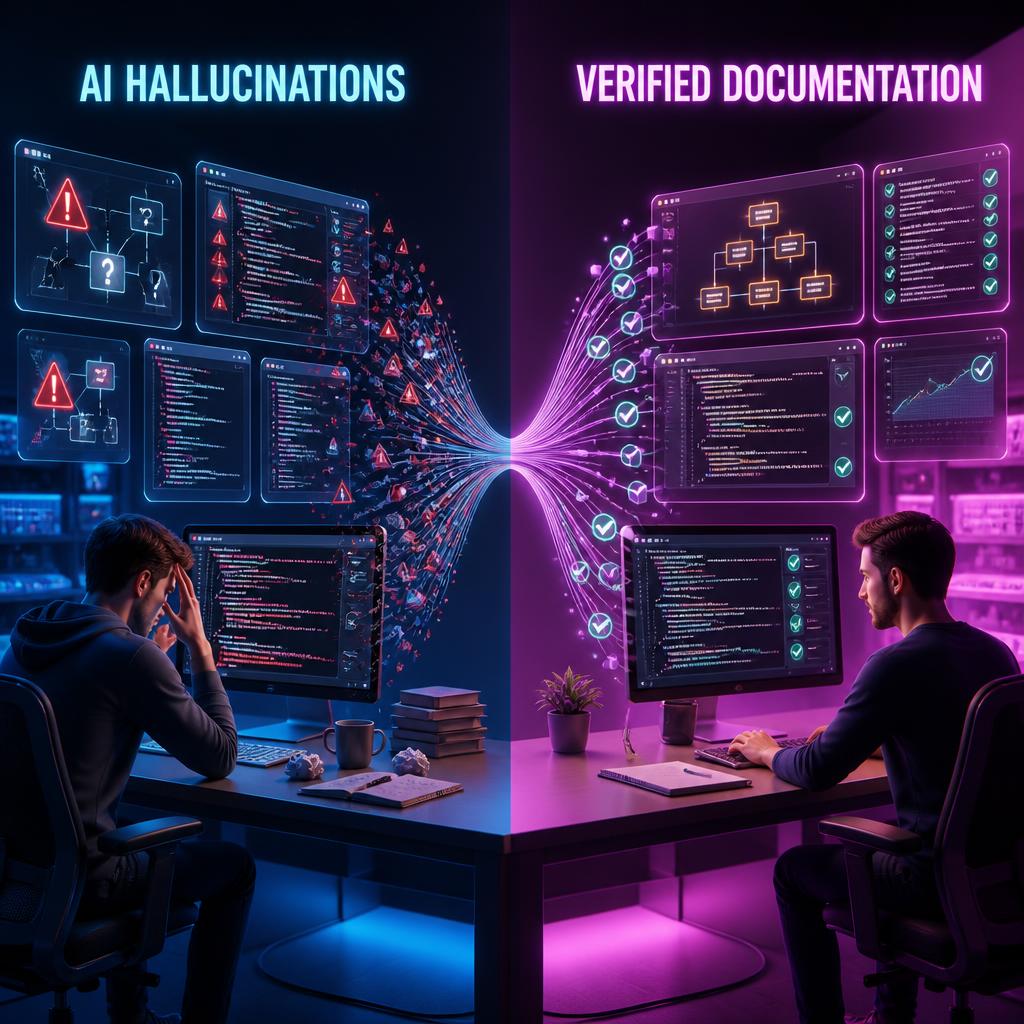

AI-generated documentation can look professional while containing instructions that are completely wrong.
An AI model might invent a configuration option, generate a nonexistent API endpoint, or describe a feature that the software does not support. These errors are commonly called AI hallucinations.
In software user manuals, such mistakes can have consequences far beyond poor writing.
Let’s break it down clearly.
How Hallucinations Enter User Manuals
AI systems generate content based on learned patterns and supplied context. Without reliable product information, they may produce plausible but incorrect explanations.
Common examples include:
- Nonexistent settings or commands
- Incorrect API parameters
- Outdated installation steps
- Fabricated error messages
- Unsupported product features
- Misleading troubleshooting instructions
These errors can be difficult to notice because the content may sound confident and authoritative.
The Cost to Users
Imagine a customer following an AI-generated tutorial that references a configuration setting that does not exist.
They may spend hours troubleshooting their environment, repeatedly reinstalling software, or contacting support.
In more serious situations, incorrect security instructions could expose sensitive information or leave systems improperly configured.
The Business Impact
Hallucinations can create several costs for software companies:
- Increased support tickets
- Lost developer time
- Reduced customer confidence
- Failed implementations
- Delayed onboarding
- Security and compliance risks
Even a small number of inaccurate instructions can damage trust when users depend on documentation to complete critical tasks.
Preventing Documentation Hallucinations
Teams can reduce these risks through a structured verification workflow:
Generate → Verify Sources → Test Instructions → Review → Publish
Useful safeguards include grounding drafts in approved documentation, executing code samples, validating API calls, and requiring expert approval for high-risk procedures.
Automated checks can catch structural errors, but they cannot guarantee that every explanation is correct.
Measuring the Real Cost
Organizations should track defects discovered after publication, support cases linked to documentation, time spent correcting errors, and the impact on task completion.
These measurements help teams determine whether AI is genuinely improving documentation productivity or simply shifting work into troubleshooting and correction.
Conclusion
AI hallucinations are not merely writing mistakes. In software manuals, they can waste time, disrupt implementations, and undermine customer trust.
The solution is not to abandon AI-generated documentation. It is to ensure that every important technical claim can be verified against reliable evidence before users depend on it.
Leave a Reply